

How to Start and Succeed in the Rice Mill Business in India
Rice is one of the most important staple foods in India, and because of this, the rice mill business has become one of the most profitable ventures in the agro-industry. With rising demand in both domestic and export markets, setting up a rice mill can provide a steady source of income if planned properly.
If you are someone who wants to start a rice mill project but do not know where to begin, this blog will guide you through the complete process. We will cover everything from planning, investment, licenses, and setup cost to understanding your income per month and overall rice mill profit margin. And the best part? It’s all written in simple, easy-to-understand language.
Why Start a Rice Mill Business?
Before jumping into the technical side, let’s understand why the rice mill business is such a great idea in India:
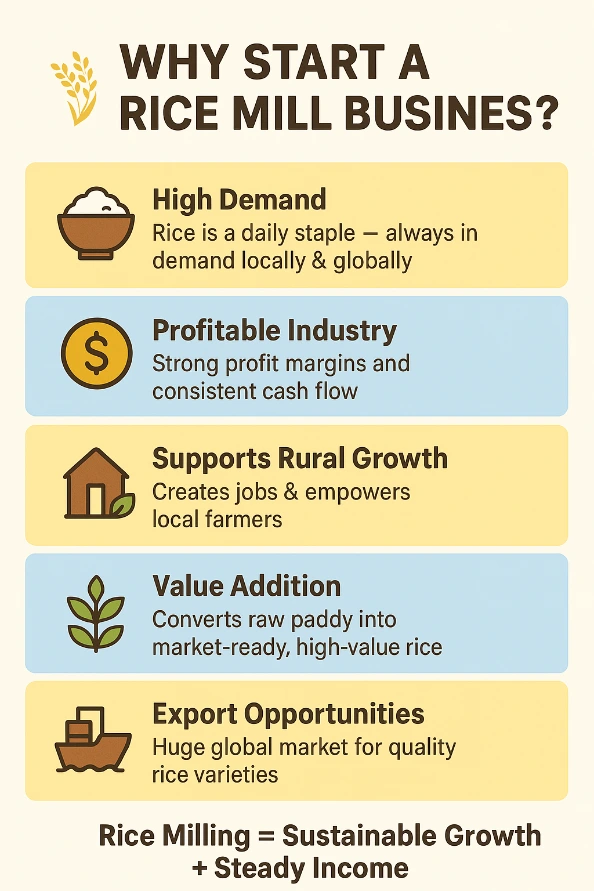
- India is the second-largest rice producer in the world.
- The demand for both raw and processed rice is constant.
- Government schemes and subsidies are available.
- You can start on a small, medium, or large scale depending on your budget.
This means that with proper planning and smart investment, you can earn a good income every month.
Step-by-Step Guide to Starting a Rice Mill Project
1. Conduct Market Research
Start by studying your local market:
- What types of rice are in demand?
- How many rice mills are already operating in your area?
- Who will be your target customers — wholesalers, retailers, exporters?
This will help you decide the type of rice you should process and the capacity of your plant.
2. Check Feasibility and Do Cost Analysis
A rice mill requires land, machinery, manpower, and licenses. Before investing, answer these questions:
- How much land will you need?
- What will be your rice mill plant setup cost in India?
- What is the average income per month from a rice mill?
- Is the rice mill profit margin enough to sustain your business?
This stage is called a feasibility study, and it is very important to avoid future losses.
3. Make a Detailed Business Plan
Your business plan should include:
- Business goals and mission
- Type of rice you’ll process
- Investment required
- Rice mill setup cost
- Expected monthly income and expenses
- Target market and distribution plan
- Marketing strategy
- Licensing and legal compliance plan
This document will help you stay focused and may also help in getting loans from banks or schemes from the government.
4. Choose the Right Location
A good location can make a big difference. Choose a place that:
- Is close to rice-producing farms
- Has good road and transport facilities
- Has easy access to electricity and water
- Is affordable in terms of land cost
Note: Rice mill setup cost in different states like West Bengal, Odisha, Chhattisgarh, or Telangana may vary due to land price, labor cost, and local demand.
How Much Investment is Needed?
The total rice mill investment depends on many factors like:
- Scale of the business (small, medium, or large)
- Land area and construction cost
- Type of machinery and automation level
- Number of workers
- Cost of licenses and power backup systems
Let’s break it down:
| Type of Plant | Investment Range (Approx) |
|---|---|
| Mini Rice Mill (1 ton/hr) | ₹2 to ₹5 lakhs |
| Small Scale (2–5 ton/hr) | ₹10 to ₹25 lakhs |
| Medium Scale (10–20 ton/hr) | ₹50 lakhs to ₹1 crore |
| Large Scale (50–100 ton/day) | ₹2 crore to ₹10 crore+ |
This includes basic construction, machinery, labor setup, and working capital.
Rice Mill Plant Setup Cost in India
Here are the major cost components involved in setting up a rice mill:
1. Land and Building Cost
- Cost depends on the city or village location.
- You can also rent or lease initially to reduce cost.
2. Machinery Cost
- De-husking machines
- Paddy cleaner
- Polishing and grading machines
- Elevators, dryers, packaging units
Tip: Compare multiple vendors to get a better deal on rice mill machinery.
3. Labor and Staffing
- Skilled and unskilled labor is needed for operations, packaging, and quality check.
4. Electricity and Water Supply
- Reliable power is crucial for machine operation.
5. Licensing and Government Fees
- Factory license
- FSSAI license
- GST registration
- Pollution NOC
- MSME Udyam Registration
- Trade license from municipality
Government Schemes and Subsidies
Government of India promotes agro-processing businesses. You may be eligible for:
- PM Formalization of Micro Food Processing Enterprises (PMFME) Scheme
- Subsidies from NABARD and State Agro Boards
- Loans with lower interest from banks under Mudra Yojana or Stand-Up India
Check with your District Industries Center (DIC) for location-specific support.
How Much Income Can You Expect Per Month?
A rice mill’s monthly income depends on:
- Processing capacity
- Type of rice produced
- Sale price in your market
- Operational costs
For example:
A small rice mill that processes 5 tons/day and sells rice at ₹25/kg can make a monthly revenue of ₹10–15 lakhs. After subtracting costs, the net profit may be around ₹1–2 lakhs/month, depending on efficiency.
With proper scaling and management, income can increase to ₹5 lakhs/month or more in medium and large plants.
Understanding Rice Mill Profit Margin
The average rice mill profit margin in India is around 5% to 10%, but it can go higher with:
- Bulk buying of paddy at low rates
- Efficient machinery and automation
- Minimizing wastage
- Reducing labor and utility costs
- Selling rice by-products like husk and bran
These by-products can be sold to poultry farms, fuel producers, or oil extraction units — increasing your income even further.
Tips to Improve Profitability
- Start small, grow gradually: Begin with a mini or small-scale plant and expand as profits come in.
- Reduce setup cost: Lease land and buy semi-automatic machinery initially.
- Use local manpower: Reduces labor costs and supports rural employment.
- Sell by-products: Maximize income by selling rice husk, bran, broken rice, etc.
- Explore exports: Once stabilized, export to Gulf, Africa, or Nepal markets.
- Get certified: FSSAI and ISO certifications can increase buyer trust.
Common Challenges and How to Overcome Them
| Challenge | Solution |
|---|---|
| High setup cost | Use government subsidy schemes |
| Seasonal business | Diversify into rice packaging, flour milling, or other grains |
| Machinery maintenance | Buy from reputed vendors and keep spare parts ready |
| Paddy price fluctuations | Sign long-term contracts with farmers or FPOs |
Frequently Asked Questions (FAQs)
Q1. How much profit can a rice mill make?
Q2. What are the main costs in running a rice mill?
Q3. What is the best location for setting up a rice mill?
Q4. How can a rice mill increase profitability?
Q5. Is government support available for rice mill businesses?
Read More About