
Polished vs Unpolished Rice: Easy Guide to Know the Difference
Polished vs Unpolished Rice: Rice is a staple food for billions across the world, but not all rice is created equal. When you visit a grocery store, you might notice two common types- polished (white) rice and unpolished (brown) rice. The difference between them goes beyond just color and texture- it’s about nutrition, processing, and overall health benefits.
In this blog, we’ll break down the key differences between polished and unpolished rice, explore their nutritional value, and help you decide which one is best suited for your diet and lifestyle. Whether you’re aiming for better digestion, balanced energy levels, or a healthier diet, understanding this comparison can help you make the right choice.
What is Polished Rice? Meaning & How Rice is Polished
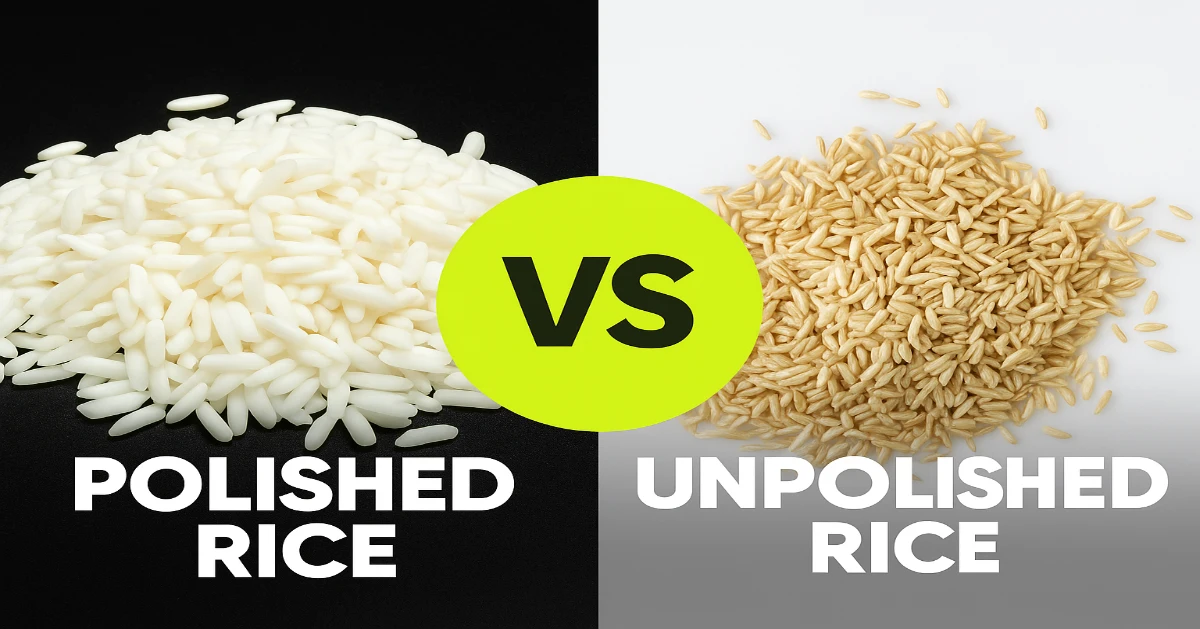
Polished rice is the white rice we usually eat. The outer bran layer is removed to make the rice smooth and shiny. Polishing makes rice look clean, store longer, and cook easily.
But when rice is polished, it loses important nutrients like fiber, vitamins, and minerals. Still, many people like polished rice for its soft texture and glossy look in everyday cooking.
How Rice is Polished
- Rice Polisher Machine – After removing the husk, the brown rice goes into a rice polisher.
- Friction and Buffing – The rice kernels rub against surfaces to remove the bran layer.
- Cooling and Dust Removal – A fan cools the rice and blows away dust.
- Adjusting Polish Level – The polishing can be changed to get different smoothness, color, and some nutrient retention.

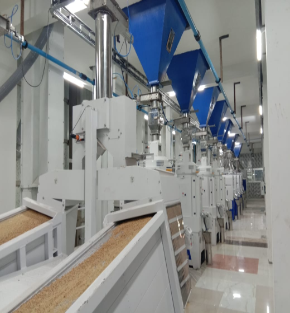
Rice polishing has become a significant part of the modern rice milling industry. Advanced rice mills use high-tech polishing machines that ensure consistent quality while removing imperfections from the rice grains.
What is Unpolished Rice?
Unpolished rice, also called brown rice, keeps its bran layer intact. This outer layer is rich in fiber, vitamins, and minerals like magnesium and selenium, making it a more nutritious choice.
Unpolished rice goes through minimal processing, so it retains most of its natural health benefits. It is perfect for those who want whole-grain rice for better digestion and heart health.
While brown rice is usually considered healthier, it cooks slower and has a denser, chewier texture than white rice. It also has a slightly nutty, earthy flavor that some people prefer over the plain taste of polished rice.
Polished vs Unpolished Rice: Which is Better?
When deciding polished vs unpolished Rice, consider the following factors:
| Factor | Polished Rice | Unpolished Rice |
|---|---|---|
| Nutrition | Lower in fiber, vitamins, and minerals | High in fiber, vitamins, and essential minerals |
| Glycemic Index | Higher, may cause sugar spikes | Lower, better for blood sugar control |
| Texture & Cooking Time | Soft and smooth, cooks faster | Chewy texture, nutty flavor, takes longer to cook |
| Shelf Life | Longer shelf life | Shorter shelf life due to natural oils |
| Cost | More affordable | Slightly costlier due to higher processing standards |
Health Benefits of Unpolished Rice
Unpolished rice offers numerous health benefits that make it an excellent choice for health-conscious individuals:
- Rich in Fiber: Promotes digestion and prevents constipation.
- Better Heart Health: Contains antioxidants and healthy fats beneficial for cardiovascular health.
- Lower Risk of Diabetes: Helps regulate blood sugar levels due to a lower glycemic index.
- Weight Management: Keeps you full for longer, reducing overeating.
- Natural Energy Source: Provides sustained energy without causing sugar crashes.
Despite these benefits, unpolished rice may not be ideal for everyone. Those with digestive issues or sensitive stomachs may find white rice easier to digest.
Which One Should You Choose?
- If you prioritize nutrition and fiber, go for unpolished rice.
- If you need faster cooking, affordability, and longer storage, polished rice is a better option.
For diabetics and health-conscious consumers, brown rice is the superior choice due to its lower glycemic index and high fiber content. However, those who prefer a milder taste and soft texture may opt for polished rice.
Best Ways to Cook Polished & Unpolished Rice
Cooking methods can influence the taste, texture, and nutritional value of rice. Here’s how to cook each type efficiently:
| Rice Type | Cooking Method | Approx. Cooking Time |
|---|---|---|
| Polished Rice | Boil or steam with a 2:1 water-to-rice ratio | 15-20 minutes |
| Unpolished Rice | Soak for 30 minutes before cooking; use a 2.5:1 water-to-rice ratio | 40-50 minutes |
Soaking brown rice before cooking helps reduce cooking time and enhances its digestibility.
How to Choose Between Polished and Unpolished Rice
- Polished rice is soft and cooks fast. It stays fresh longer. But it loses some nutrients while polishing.
- Unpolished rice keeps its fiber, vitamins, and minerals. It is healthier. But it takes longer to cook and is chewier.
- Both types are good in their own way. Polished rice is easy for everyday cooking. Unpolished rice is better if you want healthy eating.
- In the end, it depends on what you like, how you cook, and your health. Choose the type that fits your taste and lifestyle.
Frequently Asked Questions (FAQs)
Q1. Is unpolished rice the same as brown rice?
Ans. Yes, unpolished rice is commonly called brown rice because it keeps its outer bran layer.
Q2. How does polished rice taste compared to unpolished rice?
Ans. Polished rice is soft and mild in taste. Unpolished rice is chewier with a slightly nutty flavor.
Q3. What is the nutritional difference between polished and unpolished rice?
Ans. Unpolished rice has more fiber, vitamins, and minerals, while polished rice loses some nutrients during refining.
Q4. How many calories are in polished vs unpolished rice?
Ans. Polished rice has slightly fewer nutrients but similar calories. Unpolished rice is more filling due to fiber.
Q5. Are there any side effects of eating polished rice?
Ans. Eating too much polished rice may lead to lower nutrient intake since it loses fiber and vitamins during polishing.
Read More About
- 5 Ton Rice Mill Project Cost in India – Complete Guide & Pricing
- Rice Mill Factory: Setting Up a Mini Rice Mill Plant
- Single Pass Mini Rice Mill Plant: A Complete Guide
- Paddy Cleaner: Importance, Uses & Benefits